Ramadan Calendar 2026 Pakistan — When Will the First Roza Start? Complete Sehri & Iftar Timings
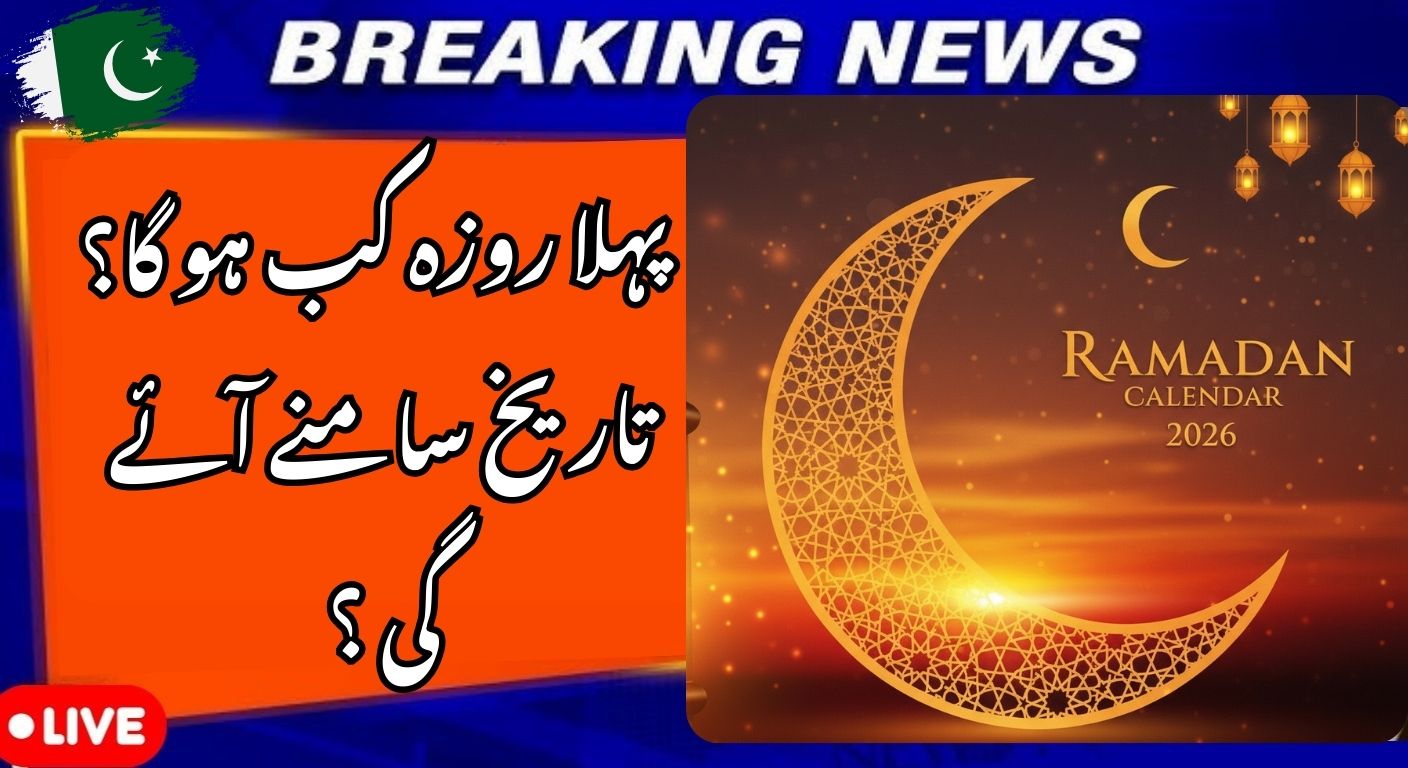
Ramadan is the holiest month for Muslims. Every year, Muslims fast from dawn (Sehri) to sunset (Iftar), pray more, read the Quran, and try to become better people. In 2026, Ramadan is expected to start in mid‑February and end in mid‑March in Pakistan, depending on the moon sighting.


When Ramadan 2026 Will Likely Begin
Ramadan in Pakistan is expected to begin around 18 or 19 February 2026, depending on when the new moon is sighted. The exact start is confirmed by the Central Ruet‑e‑Hilal Committee after people report seeing the moon locally.
Ramadan is expected to end around 19 March 2026, and Eid‑ul‑Fitr celebrations are likely on 19 or 20 March 2026, again depending on moon sighting.
What Ramadan Means
Ramadan is the ninth month in the Islamic calendar. Muslims fast during this month because it is believed the Holy Quran was first revealed in Ramadan. Fasting is one of the five pillars of Islam, meaning it is a fundamental practice for all adult, healthy Muslims.



During Ramadan:
- Muslims fast from dawn until sunset
- They perform more prayers (Salah and Taraweeh)
- They give charity (such as Zakat and Sadaqah)
- They increase recitation of the Quran
Fasting teaches patience, self‑control, empathy, and kindness.
What Is Sehri?
Sehri (also called Suhoor) is the meal eaten before dawn — before the fast begins each day. The time for Sehri ends just before Fajr prayer (dawn). It gives strength and energy for the day’s fast.
People usually eat light but nutritious foods such as roti, eggs, yogurt, fruits, and plenty of water so they can stay active throughout the day.
What Is Iftar?
Iftar is the meal eaten after sunset to break the daily fast. Muslims traditionally break their fast with dates and water, following the example of the Prophet Muhammad (PBUH). After that, they eat a larger meal with family or friends.
Iftar is a time of thankfulness and celebration, and many people share food with neighbors and the needy. Mosques often organize free Iftar dinners.
Ramadan 2026 — Estimated Sehri & Iftar Timings
Daily Ramadan Schedule 2026 – Pakistan (Representative Table)
| Day | Date (2026) | Sehri (Approx) | Iftar (Approx) |
|---|---|---|---|
| 1 | 18 Feb (Wed) | 05:30 AM | 06:00 PM |
| 2 | 19 Feb (Thu) | 05:29 AM | 06:01 PM |
| 3 | 20 Feb (Fri) | 05:28 AM | 06:02 PM |
| 4 | 21 Feb (Sat) | 05:27 AM | 06:03 PM |
| 5 | 22 Feb (Sun) | 05:26 AM | 06:04 PM |
| 6 | 23 Feb (Mon) | 05:25 AM | 06:05 PM |
| 7 | 24 Feb (Tue) | 05:24 AM | 06:06 PM |
| 8 | 25 Feb (Wed) | 05:23 AM | 06:07 PM |
| 9 | 26 Feb (Thu) | 05:22 AM | 06:08 PM |
| 10 | 27 Feb (Fri) | 05:21 AM | 06:09 PM |
| 11 | 28 Feb (Sat) | 05:20 AM | 06:10 PM |
| 12 | 01 Mar (Sun) | 05:19 AM | 06:11 PM |
| 13 | 02 Mar (Mon) | 05:18 AM | 06:12 PM |
| 14 | 03 Mar (Tue) | 05:17 AM | 06:13 PM |
| 15 | 04 Mar (Wed) | 05:16 AM | 06:14 PM |
| 16 | 05 Mar (Thu) | 05:15 AM | 06:15 PM |
| 17 | 06 Mar (Fri) | 05:14 AM | 06:16 PM |
| 18 | 07 Mar (Sat) | 05:13 AM | 06:17 PM |
| 19 | 08 Mar (Sun) | 05:12 AM | 06:18 PM |
| 20 | 09 Mar (Mon) | 05:11 AM | 06:19 PM |
| 21 | 10 Mar (Tue) | 05:10 AM | 06:20 PM |
| 22 | 11 Mar (Wed) | 05:09 AM | 06:21 PM |
| 23 | 12 Mar (Thu) | 05:08 AM | 06:22 PM |
| 24 | 13 Mar (Fri) | 05:07 AM | 06:23 PM |
| 25 | 14 Mar (Sat) | 05:06 AM | 06:24 PM |
| 26 | 15 Mar (Sun) | 05:05 AM | 06:25 PM |
| 27 | 16 Mar (Mon) | 05:04 AM | 06:26 PM |
| 28 | 17 Mar (Tue) | 05:03 AM | 06:27 PM |
| 29 | 18 Mar (Wed) | 05:02 AM | 06:28 PM |
| 30 | 19 Mar (Thu) | 05:01 AM | 06:29 PM |
These times are estimates and may differ by city and local announcements.
Daily Life in Pakistan During Ramadan
When Ramadan arrives, daily life changes in Pakistan:
- School and office hours are often shortened
- Markets stay open late at night
- People go to mosques for Taraweeh prayers after Isha
- Charitable activities increase
- Families sit together for Sehri and Iftar
The atmosphere becomes more calm, spiritual, and caring than usual.
Taraweeh Prayers
Each night after Isha prayer, Muslims pray Taraweeh, which are extra prayers done only in Ramadan. Many mosques try to complete the whole Quran over the 30 nights. Men, women, and children attend these prayers with devotion.
Health Tips for Fasting
To stay healthy while fasting:
- Eat balanced food at Sehri
- Avoid too much fried or heavy food at Iftar
- Drink plenty of water between Iftar and Sehri
- Include fruits, vegetables, yogurt, and dates
- Get good rest and sleep
A healthy routine helps you fast without weakness or dehydration.
Laylat‑ul‑Qadr — The Night of Power
The last ten nights of Ramadan include Laylat‑ul‑Qadr, also called the Night of Power. This night is believed to be better than a thousand months in spiritual reward. Muslims spend these nights praying, reading the Quran, and asking Allah for forgiveness. Many people also go for Itikaf (staying in the mosque for worship).
End of Ramadan & Eid‑ul‑Fitr 2026
Ramadan ends when the Shawwal moon is sighted. In 2026, this is expected around 19–20 March, so Eid‑ul‑Fitr will likely be celebrated on 20 March 2026 in Pakistan. On Eid day, Muslims pray the special Eid prayer, give Fitrana, visit family, wear new clothes, and share joy together.
Conclusion
Ramadan 2026 in Pakistan is expected to be a month of spiritual growth, self‑discipline, and community unity. By knowing the Sehri and Iftar timings, praying regularly, and helping others, Muslims can make this Ramadan especially meaningful and rewarding.
Always remember that official moon sighting announcements and local mosque timetables provide the final Sehri and Iftar times for your area — so check those as Ramadan approaches.