BISP Eligibility Update 2026 – Who Can Benefit from Benazir Kafaalat Program
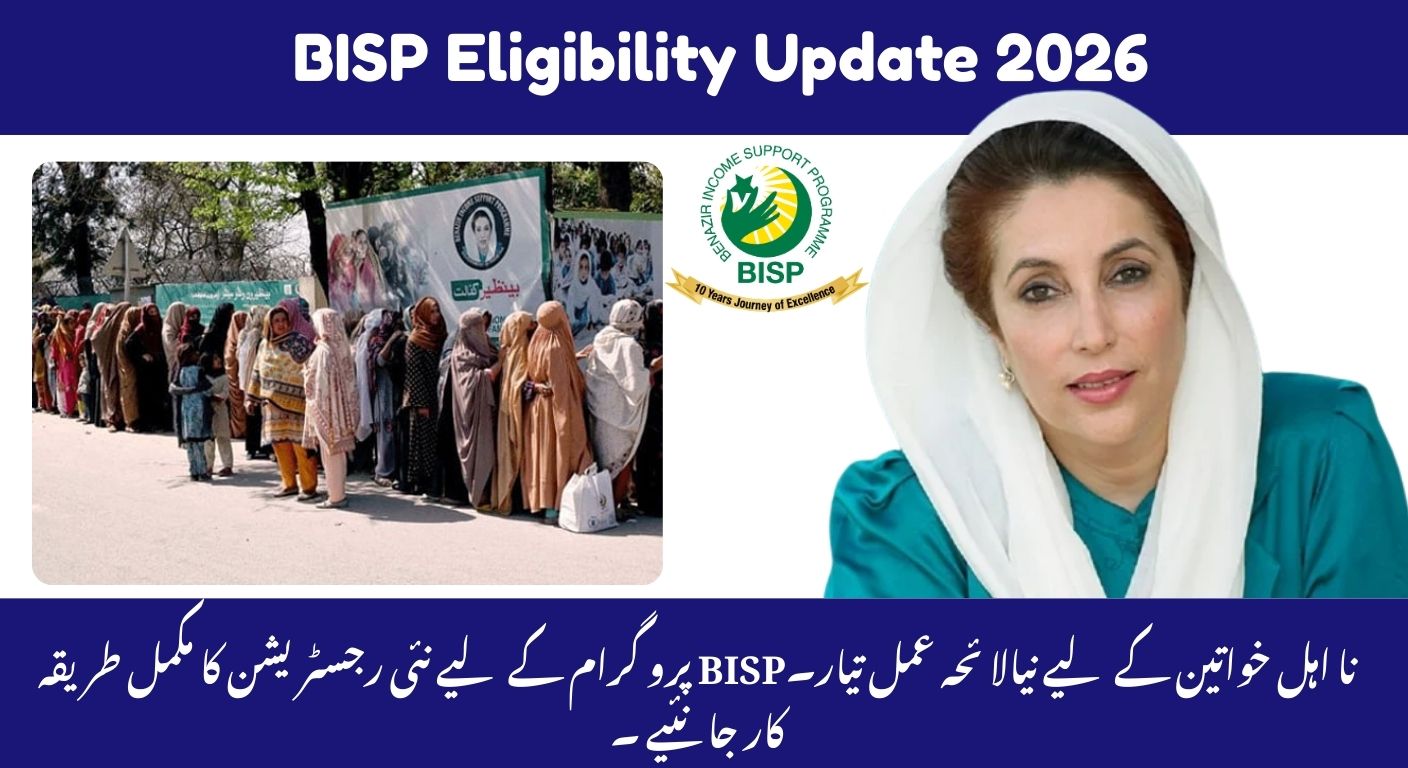
The Benazir Kafaalat Program, commonly called BISP, is Pakistan’s largest social welfare initiative aimed at helping low-income families, especially women who are struggling to meet basic household needs. In 2026, the program continues to play a vital role in supporting vulnerable families by providing quarterly cash payments and other benefits.



Knowing who is eligible for BISP is very important because it ensures that the right people get support on time. This guide explains BISP eligibility criteria for 2026, including updates, key requirements, and how women can apply or check their status.
What Is BISP?
BISP is a government program started to empower women and families with financial support. It helps cover daily expenses like:
- Food and groceries
- Household needs
- Healthcare costs
- Education for children
The program mainly targets women as heads of households, widows, and families in economic distress.


In 2026, BISP continues to follow the Benazir Kafaalat system, which includes:
- Cash support via quarterly payments
- Educational support for children in some districts
- Digital tracking and SMS notifications to ensure transparency
Who Can Benefit from BISP in 2026?
To receive cash support under BISP 2026, women and families must meet certain eligibility criteria. These rules help ensure that the most deserving people benefit.
1. Female Beneficiaries
BISP primarily provides support to women who:
- Are heads of their households
- Widows or single mothers
- Women taking care of elderly or disabled family members
- Women from low-income families struggling to cover basic needs
This approach empowers women to manage household expenses and support their families.
2. Residency and CNIC
- Must be a resident of Pakistan
- Have a valid CNIC linked to the 8171 system
- CNIC must be active and updated to receive payments
3. Income Assessment
BISP uses the Poverty Means Test (PMT) to determine eligibility. Families that qualify generally have:
- Low monthly income
- Limited property or assets
- Dependents to support
This ensures that support is focused on families who need it most.
4. NSER Survey Completion
- Women must complete or update their National Socio-Economic Registry (NSER) survey
- This survey collects information about family size, income, and living conditions
- Updated data ensures accurate payments and helps avoid delays
5. Exclusion Criteria
Certain people are not eligible for BISP 2026 payments, including:
- Government employees or pensioners
- Families with high income or large assets
- Individuals receiving similar cash support from other government programs
BISP ensures that limited resources go to those who need them most.
Special Quotas and Focus Areas
BISP also includes special provisions to promote inclusivity:
- Women from rural areas get priority to address regional inequality
- Disabled women and families receive additional support
- Orphans and children in need are included in special programs alongside main cash support
These measures help ensure that no deserving person is left out.
How to Apply for BISP 2026
The application process is straightforward and designed for easy access by women:
Step 1: Registration
- Visit your nearest BISP center or authorized registration point
- Provide CNIC, family details, and basic personal information
Step 2: NSER Survey
- Complete the National Socio-Economic Registry survey
- Ensure all details about family income, members, and living conditions are accurate
Step 3: Verification
- Authorities verify CNIC and survey data
- Any incorrect or incomplete information may delay eligibility
Step 4: Payment Assignment
- Once verified, eligible women are added to the payment system
- They will receive quarterly notifications about payment dates and amounts
Step 5: Tracking Payment
- Use 8171 SMS service or BISP online portal to check your payment status
- Always keep your CNIC and mobile number updated
Payment Amount for Eligible Women
In 2026, the regular quarterly payment is Rs. 14,500 per cycle.
Sometimes, if a previous payment was missed or delayed, beneficiaries may receive a combined payment of around Rs. 27,000. This ensures all pending amounts are cleared together.
How BISP Supports Families
BISP helps families in many ways:
- Financial Relief – Cash support helps cover daily needs without borrowing money.
- Women Empowerment – Women manage household finances and gain independence.
- Child Education – Some support programs help children with school and college fees.
- Health & Nutrition – Families can buy nutritious food and meet basic medical needs.
- Digital Awareness – SMS and online portal keep beneficiaries informed about payments.
Key Tips for Beneficiaries in 2026
- Update CNIC and mobile number in BISP system
- Complete NSER survey accurately
- Check eligibility regularly through SMS or portal
- Avoid paying agents – all payments are free
- Save SMS alerts and receipts for reference
Common Questions
Q1: Can men receive BISP payments?
A: Generally, no. BISP focuses on women as household heads. Men may benefit only in special cases or if the female head is unavailable.
Q2: Can families receive other government cash schemes along with BISP?
A: Usually, BISP excludes beneficiaries of similar cash programs. Always verify before applying.
Q3: What if my payment is delayed?
A: Payment delays happen due to data verification or system updates. BISP ensures all eligible women eventually receive their money.
Conclusion
The BISP Eligibility 2026 update ensures that low-income women and their families get much-needed financial support. By clearly defining eligibility criteria and using digital tools for transparency, the program empowers women, helps families meet daily needs, and supports education and healthcare.
Eligible women should:
- Keep their CNIC and family data updated
- Complete the NSER survey accurately
- Check payment and eligibility through 8171 SMS or the online portal
BISP continues to be a lifeline for thousands of women in Pakistan, helping them live with dignity and stability while supporting the future of their families.