Gold Discovered in Pakistan, Sparking New Economic Hopes
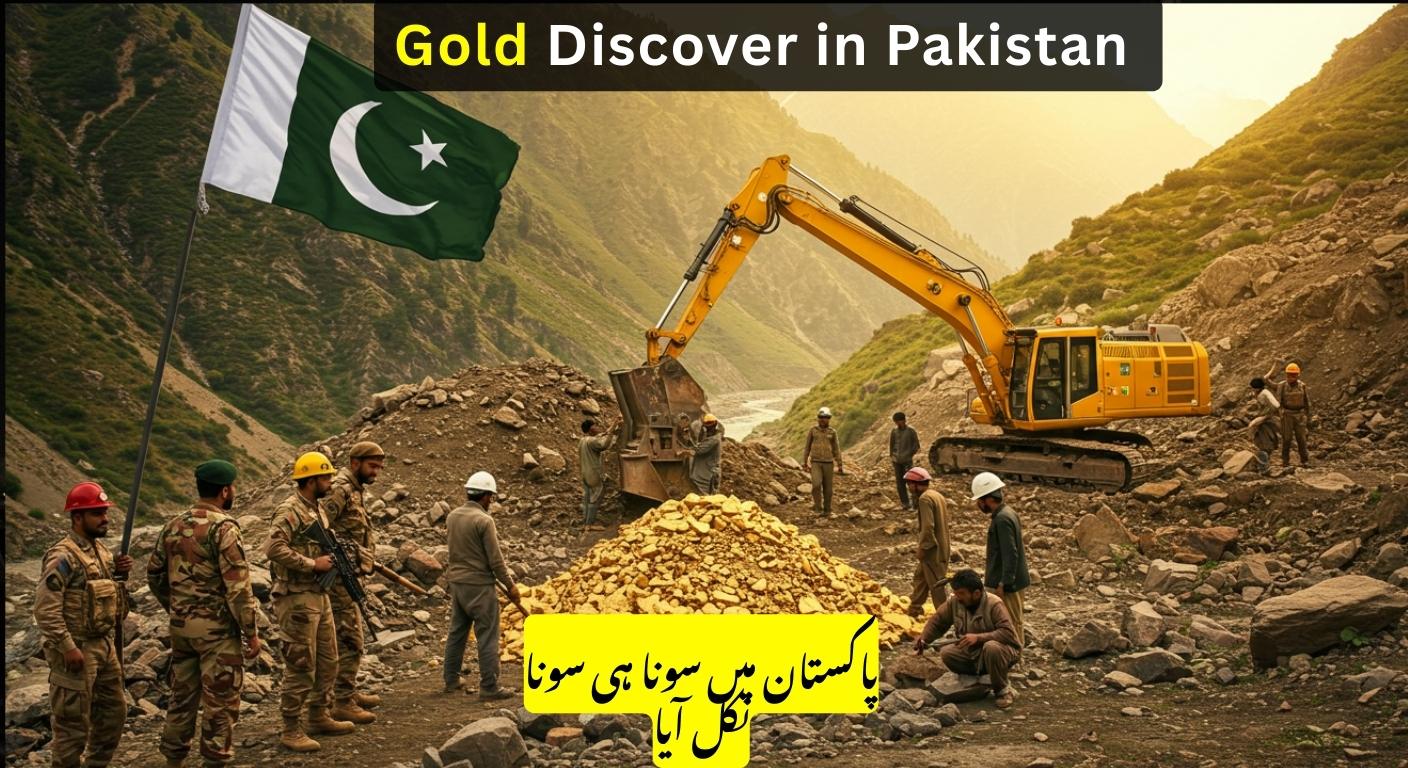
In recent years, Pakistan has seen major news and claims about gold discoveries in different parts of the country. These reports have created excitement because gold is a valuable mineral that can boost the economy, create jobs, and attract investment. While some discoveries are hopeful and under discussion, others are still in early stages and require thorough government verification.



Below is the latest information available up to early 2026.
1. Huge Gold Reserves Found in Tarbela Dam Soil
One of the biggest recent claims is that gold reserves worth an estimated $636 billion have been discovered in the soil of the Tarbela Dam area. This estimate was revealed in late 2025 by Hanif Gohar, Chairman of Air Karachi and former senior vice president of the Federation of Pakistan Chambers of Commerce and Industry (FPCCI).
According to the report:



- Soil samples were collected from inside the Tarbela Dam, and laboratory tests showed a large amount of gold content.
- The total value based on these estimates could be around $636 billion, which some analysts say might have the potential to help Pakistan address economic challenges like debt.
- The findings were presented to Prime Minister Shehbaz Sharif and the Army Chief, who responded positively to the briefing.
- Discussions are underway about how best to extract and develop these resources, potentially with the Water and Power Development Authority (WAPDA) or private investors.
However, it’s important to know that:
- These figures are preliminary estimates based on soil analysis.
- Actual mining and extraction would require further exploration, feasibility studies, and government planning.
- The discovery is not yet in full commercial production.
2. Gold Deposits Found Near Attock (Punjab)
Earlier, in 2025, reports emerged that the Geological Survey of Pakistan had identified significant gold deposits in the Attock district of Punjab. This finding was linked to placer gold — loose gold particles found in riverbeds and soil — and was reported to extend over a 32‑kilometer stretch near the confluence of the Indus and Kabul rivers.
According to these reports:
- The total gold estimate was put at around 2.8 million tolas, which is roughly Rs800 billion in value.
- The discovery was said to be validated by the Geological Survey of Pakistan, and there were plans to put these blocks up for auction to investors and mining companies.
- Local officials and experts claimed this find could transform regional mineral development and create new opportunities.
However, these findings are still subject to further verification and exploration before large‑scale mining can begin.
3. Gold‑Copper Mineralisation in Balochistan
Separate from pure gold discoveries, significant gold‑associated mineralisation has been found in Balochistan’s Chagai district as part of broader mining exploration efforts. This find involves copper and gold together and was announced by a private company during a mining forum.
This discovery shows that:
- Balochistan has rich mineral potential beyond coal, including copper and gold.
- The gold component in these mineralised zones could become economically valuable with further exploration.
- Multiple drilling results confirm the presence of mineral veins that warrant additional work to determine commercial viability.
What This Means for Pakistan
These reported gold discoveries — in Tarbela, Attock, and Chagai — are significant because:
• Economic Potential
Gold is a valuable natural resource. Developing gold mines could help Pakistan:
- Boost export earnings
- Create jobs in mining and related sectors
- Attract foreign investment
The reported $636 billion estimate has drawn particular attention because of its potential scale if proven correct.
• Need for Further Work
Despite encouraging reports:
- These discoveries still require detailed geological surveys
- The government and private sector would need to invest in exploration drilling, feasibility studies, and mining infrastructure
- Regulatory approvals and environmental assessments are necessary before any large‑scale mining can begin
• Market Context
Meanwhile, gold prices in Pakistan and globally have been rising through early 2026, which adds incentive to potential mining development. Local gold prices have hit higher levels in tola terms, reflecting increased demand and market dynamics.
Future Outlook
If these gold resources are confirmed through extensive testing and approved for mining:
- They could transform Pakistan’s mining sector
- Help reduce the trade deficit by replacing gold imports
- Increase government revenue through royalties and exports
- Stimulate related industries such as refining and jewellery manufacturing
However, experts advise caution because large resource estimates often change after detailed exploration and economic feasibility analysis.
Conclusion
In 2025–2026, Pakistan has been linked with major gold discoveries ranging from high‑value gold estimates inside the Tarbela Dam soil to traditional placer gold pockets near Attock and mineralised zones in Balochistan’s mining belts. These developments signal huge mineral potential for the country if followed by proper exploration, investment, and planning.
While the figures — especially the $636 billion estimate — may seem large, they still need full technical verification and commercial evaluation before turning into productive mining operations that benefit the Pakistani economy.