New WAPDA Policy 2026 for Installing Multiple Electricity Meters In One Roof
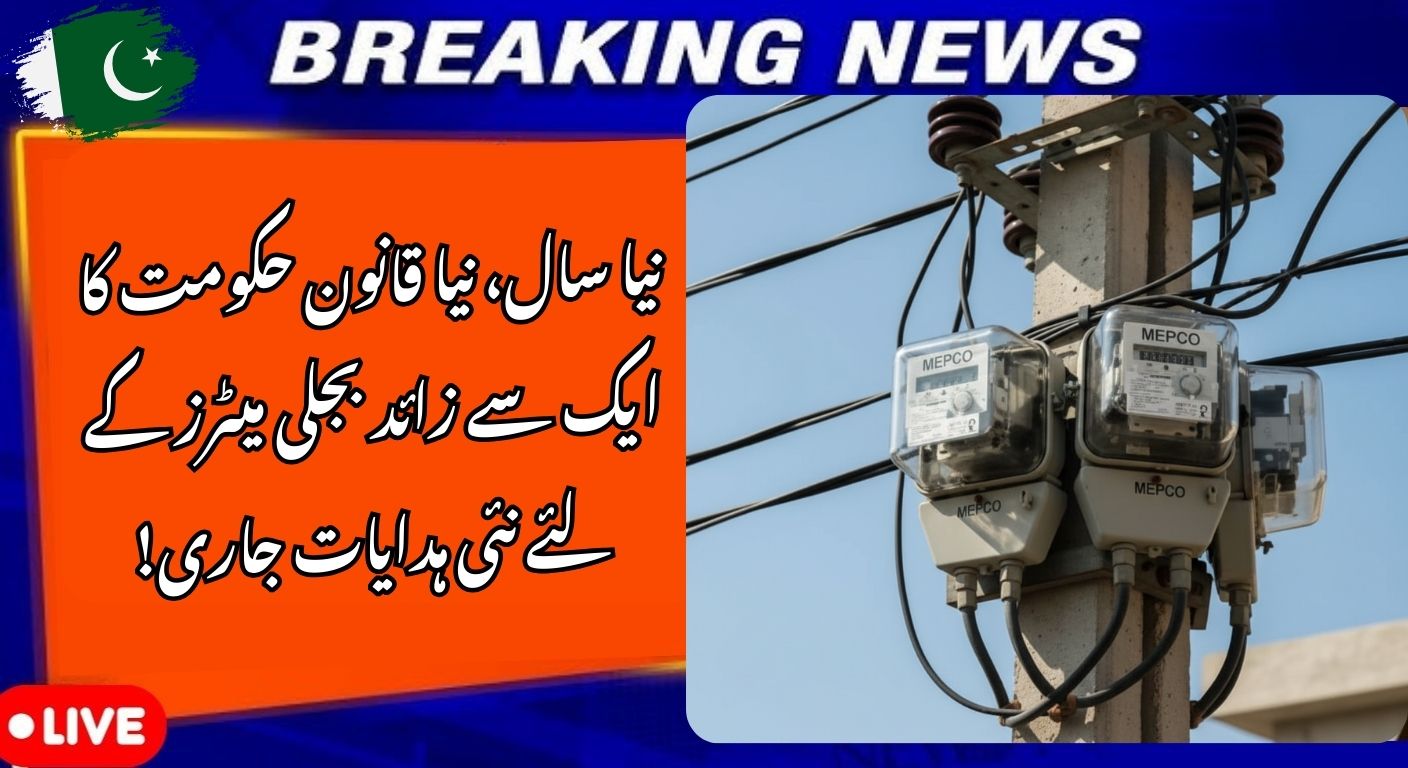
In 2026, the Water and Power Development Authority (WAPDA) and Pakistan’s Power Division have clarified important rules about installing multiple electricity meters in one house. Many people were worried that extra electricity meters would no longer be allowed, but that information was incorrect and misleading.


According to the latest policy, multiple electricity meters are still allowed — but only when certain conditions are met. This policy is designed to help joint families, landlords, and tenants get fair and transparent electricity bills.
Why the 2026 Policy Is Important
In Pakistan, many homes are joint family houses or shared by different families and tenants. Without separate meters, electricity billing becomes a major challenge because one bill is shared among different households.
The 2026 policy focuses on:
 PSL 11 Start Date Confirmed: Full Schedule Update Brings Excitement for Cricket Fans
- Good News for Everyone! 4 Consecutive Holidays Expected Next Month, Bringing Relief for Students and Office Workers
- Rising Concerns Over High Petrol and Diesel Prices in Pakistan 2026 – Expected Reductions Could Bring Relief to Consumers and Boost the Economy



- Making electricity billing fair for each household
- Separating actual electricity use between units
- Reducing disputes between tenants and landlords
- Preventing misuse of subsidized electricity slabs
- Improving transparency and accountability in billing
Before this, some households installed multiple meters just to gain lower tariff benefits under subsidized categories — even when they weren’t separate living units. The updated policy ensures only genuine cases benefit.
Are Multiple Electricity Meters Allowed in 2026?
Yes — multiple electricity meters are allowed under the 2026 WAPDA rules. There is no blanket ban on extra meters.
However, WAPDA and the Power Division have clearly stated that additional meters will only be issued if the property truly has independent living units that meet specific structural and legal requirements.
This policy applies to all major power distribution companies (DISCOs) like LESCO, IESCO, FESCO, MEPCO, K‑Electric, etc.
Conditions for Installing Extra Electricity Meters
To get a second or even third electricity meter, your house portion must meet the following mandatory conditions:
1. Separate Portion
Each part of the house must be an independent living unit — not just a room or shared space.
2. Independent Entrance
The unit must have its own separate entry and exit to prove it is a distinct household.
3. Separate Kitchen
Each unit must have its own kitchen — this is a key requirement to show that it is a fully functioning residence.
4. Separate Wiring
The household’s electricity wiring must be separate and independent from other units in the same building.
5. Legal Affidavit
Applicants may be required to submit an affidavit confirming that the space is an independent unit.
6. DISCO Inspection
WAPDA/DISCO officials will visit the property to verify the structure and confirm that the conditions are met before approving an additional meter.
Who Can Apply for an Additional Meter?
Multiple electricity meters are not limited to homeowners only. Tenants can also apply for a separate meter. However, tenants must provide:
- Written permission from the landlord
- A valid rent agreement
- Proof that they live in an independent portion that meets all the structural conditions listed above
This helps reduce disputes between landlords and tenants about electricity usage and shared billing.
Common Myths vs. Facts About Multiple Meters in 2026
| Myth | Reality |
|---|---|
| Only one meter is allowed per house | ❌ False — multiple meters are permitted with conditions ✔ |
| Extra meters will be removed | ❌ Incorrect — legally installed meters remain valid ✔ |
| Tenants cannot apply | ❌ False — tenants can apply with documents ✔ |
| Government cancelled approvals | ❌ Wrong — approvals continue under clear rules ✔ |
This clears confusion caused by fake social media posts about a ban on extra meters.
Step‑by‑Step Process to Apply for an Extra Meter (2026)
If you want to install an additional electricity meter, follow these steps:
- Visit your local DISCO Office: Go to your nearest power distribution office (LESCO, IESCO, etc.).
- Fill out the Application Form: Ask for the “Additional Meter / New Connection” form.
- Submit Required Documents: Attach your CNIC, ownership or tenancy proof, and affidavit.
- Site Inspection: DISCO officials will check the property physically.
- Pay Charges: Submit the security deposit and any connection fees.
- Meter Installation: After approval, your extra meter will be installed.
This process ensures that only genuine and compliant cases get additional meters.
Documents Required for Multiple Electricity Meters
Before applying, prepare these documents:
- Copy of CNIC for identity
- Proof of property ownership or tenancy
- Affidavit confirming separate household status
- Wiring verification or property layout (if requested)
- DISCO inspection report (after site visit)
Having complete documents helps avoid delays in approval.
Benefits of Installing Multiple Meters Legally
Fair Electricity Bills
Each household unit receives a separate bill, so no one pays for another’s usage.
Transparency Between Tenants and Landlords
Bills are clear and assigned to the correct user, reducing disputes.
Protection From Penalties
Legal meters keep you safe from fines and disconnection that occur from illegal or unauthorized setups.
Proper Use of Subsidies
Transparent billing means subsidies go to the right users, and misuse is minimized.
Conclusion
Under the WAPDA Rules 2026, installing multiple electricity meters in one house is legal as long as each living unit is truly independent. This policy benefits joint families, landlords, tenants, and anyone living in shared homes who wants fair and clear electricity billing. While older misinformation about bans continues to circulate, the official rules confirm that additional meters are still allowed with clear conditions.
If you plan to apply for an extra meter, make sure you have complete documents, a separate living space, and follow the official process so your application is approved smoothly.